





First Impressions And Platform Rhythm
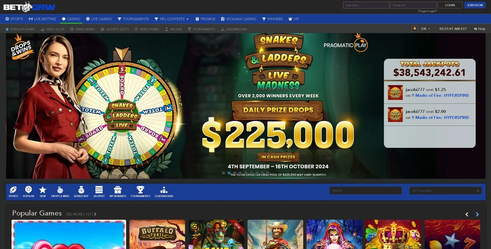
A common mistake is to judge a casino-style platform by the first bright screen alone. Picture a player opening BetGRW after dinner, spotting the main banner, and assuming the rest of the experience will be just as simple. The stronger move is slower. Open the account area, look for the cashier, find the support route, and check whether the layout still feels clear once the homepage is no longer doing all the work.
BetGRW is available in Canada for adult players, subject to local restrictions and the platform’s own conditions. That matters because the useful question is not whether the first screen looks attractive. The useful question is whether the platform stays understandable once a player starts making real choices. Can you tell what happens after registration? Can you see where limits and help tools sit? Does the next step feel obvious without pressure?
Trust usually grows from structure, not excitement. If the balance area is readable, the menu path is easy to follow, and the account pages do not force you to guess, the session starts on steadier ground. If the layout feels noisy or the route from the lobby to the account looks awkward, that is useful information too. Most casino frustration does not begin with one dramatic error. It begins with small uncertainty that keeps repeating.
What A Careful First Visit Looks Like
Say you open the site with the simple goal of seeing whether it feels usable enough for a real session later. A careful first visit does not rush into the first game tile. It checks where the account history sits, whether the payment section is easy to locate, and how quickly a player can reach support or responsible play tools. These small checks reveal more about the platform than any oversized promotion ever will.
Registration, Login, And Account Accuracy
The account is the foundation of everything that follows. If the profile is accurate, later actions feel ordinary. If it is rushed, even normal steps can turn into irritating delays. Think of a player who signs up with an older email because it still works somewhere, saves the password on a shared device, and promises to clean it all up later. Later almost always arrives at the exact moment the account needs to work properly.
Use real details from the beginning. Keep the email current, make sure personal information is consistent, and choose a password you can manage without making it careless. None of this feels exciting, yet it prevents avoidable problems when access needs to be restored, when the cashier expects account details to line up, or when support needs to understand exactly who is writing.
There is also a difference between being registered and being ready. A player may complete sign-up and still have no idea where messages appear, how limits are adjusted, or where to check account status if something changes mid-session. The stronger habit is to treat setup as part of play, not as the dull screen you rush through to reach the fun part.
Why Profile Details Save Time Later
Consider two players creating the same kind of profile. One checks every field once more before moving on. The other rushes because the game lobby looks more interesting than the form.
A week later, only one of them clearly remembers which email was used, whether the details match the preferred payment method, and what needs to be updated first if something goes wrong. That difference matters more than most people expect because a clean profile protects time as much as it protects access.
Keeping Devices And Sessions Private
Now picture someone logging in from a borrowed laptop because it feels convenient in the moment. Maybe the browser offers to store the password. Maybe the session remains open after they walk away. Small conveniences like that can create much larger trouble than any missed bonus ever could. A better routine is simple: use devices you control, sign out when the visit ends, and avoid changing sensitive account details while distracted or on unstable public connections.

Payments, Withdrawals, And Budget Control

The cashier deserves full attention. A player might see a highlighted promotion, open the payment page immediately, and add funds before deciding how much money belongs to the evening. That is where many sessions lose shape. The budget should come before the cashier, not after it. Once the number is decided, the payment step becomes practical instead of emotional.
A stronger order is simple. Set the amount first. Then open the payment section, confirm the selected option, read the message on screen, and make sure the total still matches the session plan. If the site shows an extra note or asks for another step, stop and read it instead of clicking through on momentum. The cashier is not a side screen. It is part of the session strategy.
Withdrawals require the same patience. Players often expect them to feel instant because the request itself takes only a few clicks. In practice, what happens next can depend on the selected option, the state of the account, and the current notice shown on screen. If something looks unusual, the useful response is not irritation. It is information. Check the date, amount, selected method, and current message before deciding whether support is actually needed.
Player Area | What To Check | Better Action |
|---|---|---|
Profile | Email, name, current details | Keep everything accurate from day one |
Account Entry | Device, saved access, session reason | Log in only when the plan is clear |
Cashier | Amount, payment option, confirmation text | Approve only after reading the full prompt |
Balance View | Cash funds, bonus funds, active play balance | Know which balance is being used |
Limits Menu | Deposit cap, reminders, break tools | Set boundaries before opening a game |
Support Route | Topic, message field, key facts | Prepare a short timeline before writing |
The table matters because it reduces the number of emotional decisions a player makes once money is moving. The more routine the process feels, the easier it is to keep the session inside the limits you already chose.
Why The Cashier Changes The Mood
There is a moment when a session stops feeling like entertainment and starts feeling like administration. It often happens at the cashier. Picture someone who was calm in the lobby, then becomes impatient the second the payment screen appears.
That shift is common because the player now feels closer to a real outcome. A better habit is to expect that shift and slow down precisely there. The cashier rewards patience much more than speed.
Game Choice, Pace, And Realistic Sessions
Game choice is not only about theme or graphics. It is also about rhythm, clarity, and how quickly attention gets consumed. A player might open the loudest title on the page simply because it looks exciting, then realize after a few rounds that the pace is too sharp and the bankroll is moving faster than expected. That is not failure. It is useful information, and it gives the player a chance to correct course before the session becomes expensive or frustrating.
Usually, a short low-stake test is the best filter. Open one title, read the rules, make a few careful rounds, and notice what the game asks from your attention. Are the controls easy to follow? Does the feature system make sense? Is the rhythm comfortable for the mood you actually brought into the evening? If the answer is no, leave. There is no prize for forcing yourself to stay with a game that does not fit.
A stronger question is not, “What looks fun right now?” It is, “What kind of pace fits my time, my energy, and my budget tonight?” Some evenings suit a straightforward slot with simple controls. Other evenings may suit a slower table-style flow or a shorter session with less variety. When the game matches the player, control becomes easier to maintain.
Testing One Title Before You Commit
Suppose the goal is not to win the evening in five minutes but to understand whether one game deserves more of your attention. A short test round or two at a modest stake changes the quality of the whole session because it turns the opening minutes into observation instead of commitment. If the title feels clear, continue. If it feels chaotic, the lesson was cheap, and that is exactly what a first look should accomplish.
When A Game Stops Fitting The Evening
Mood affects decisions more than most players admit. Think of someone logging in after a long day and choosing a fast, noisy title even though their focus already feels thin. What looked exciting one minute earlier can become irritating very quickly.
The better move is to notice the mismatch early. If the pace feels too sharp for the night you are having, reduce the stake, change the game, or end the session. Good control starts with honest self-reading.
Support, Limits, And Responsible Play Tools
Support is easiest to use when the player writes clearly. A messy session often leads to a vague message like “nothing works,” but that gives the support team almost nothing useful to follow. A stronger note includes the date, the section being used, the action taken, and the exact wording shown on screen. Calm detail is not just polite. It is effective. Support can work from a sequence much faster than from a feeling.
Limit tools matter for the same reason. Deposit caps, reminders, short breaks, and stronger exclusions turn vague intentions into real boundaries. Most players wait too long to use them because they imagine those tools are only for major problems. In practice, they are most useful while the pattern is still small enough to interrupt easily.
A practical player also learns where these tools sit before they are urgently needed. If you only search for a break option in the middle of frustration, even a simple step can feel harder than it is. Knowing the route in advance changes the experience.
Writing A Better Support Message
Imagine two players facing the same account issue. One sends a long complaint full of guesses. The other lists the date, the section, the action taken, and the wording shown on screen. The second message is easier to solve because it gives support something concrete to follow. That is why calm, short, factual writing usually gets further than emotional writing, even when both come from a real problem.
A Practical 2026 Routine For Canada Players
A useful 2026 routine does not need to be complicated. Start with the account, choose the budget, decide the reason for logging in, and know the stop point before the first game opens. If promotions or visible account perks appear, let them fit inside that structure instead of letting them rearrange the whole evening. The strongest sessions usually look ordinary, not dramatic.
Picture two players seeing the same site at the same time. One treats every visible offer as a reason to stay longer. The other checks the time, the budget, and the original purpose of the visit before doing anything else. The second player usually stays in better control because the routine is stronger. The platform becomes easier to use well when the player is not improvising every decision.
That is what makes a casino-style site feel manageable over time. The player does not need perfect discipline every minute. The player needs a repeatable structure: accurate details, one budget, one purpose, one exit point, and support tools ready before frustration grows. The more ordinary that routine feels, the easier it is to repeat without stress.